Insurgent Ecologies


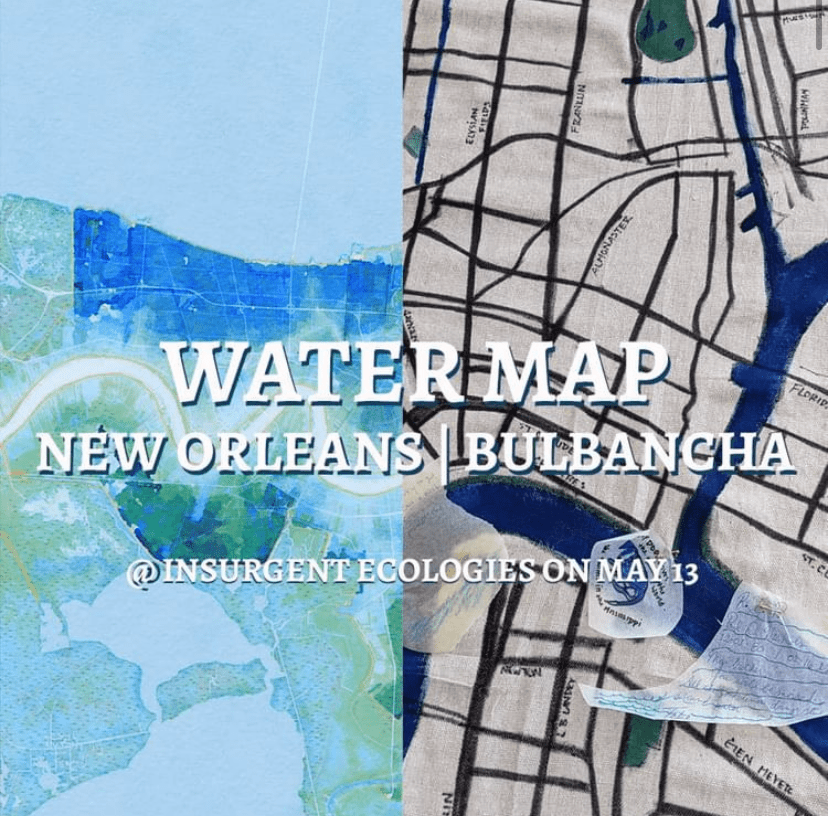
Insurgent Ecologies is curated by Imani Jacqueline Brown & Shana M. griffin and organized by Antenna and the New Orleans Center for the Gulf South at Tulane University (“NOCGS”), with support from the Gulf South Open School, PUNCTUATE, & Tulane University’s Newcomb Art Department. This exhibition, public programing, and print project features 45 artists and initiatives and stems from transdisciplinary collaborations nested within the Mississippi Open School for Kinship and Social Exchange and the international Anthropocene Commons project. The exhibit spans two venues, Antenna Gallery and 3OneOne6, and opens Friday-Sunday from 12PM-5PM

The exhibition engages artwork, projects, and collaborative initiatives across the Mississippi watershed that disrupt systems of racial enslavement, coloniality, displacement, and industrial encroachment, which rupture space-time to form a “continuum of extractivism.” Insurgent Ecologies interrogate common assumptions and false solutions while imagining new ecologies that can repair the violence of the “plantationocene”.

This project is also part of the The Mississippi River Open School for Kinship and Social Exchange (2022-2024); an expansive educational and research collaboration through the formation of five river hubs spanning the river’s headwaters to the Gulf. The Open School engages pressing issues at the intersections of race, environment, and extraction through education, cultural exchange, and action.

The Gulf South Open School (GSOS) comprises six organization-based projects in this region. They are the following: Civic Studio (Katie Fronek and Aron Chang), PUNCTUATE (Shana M. griffin), New Orleans Center for the Gulf South (Rebecca Snedeker and Denise Frazier), Dillard University (Amy Lesen), Land Memory Bank and Seed Exchange (Monique Verdin), and Antenna (Monica Mejia Restrepo).

Naming the Goal: Pontchartrain Basin Agricultural Network


The Lake Pontchartrain Basin is a 10,000 square mile watershed encompassing 16 Louisiana parishes. The land use of the region is both rural and urban.  It is the most densely populated region in Louisiana, including metro New Orleans and the state capital, Baton Rouge.  The Basin is one of the largest estuarine systems in the Gulf of Mexico and contains over 22 essential habitats and numerous rare plants. 

Lake Pontchartrain Basin Foundation website

For a region known for its legendary food,  southeastern Louisiana’s direct marketing farming production remains shockingly sparse and largely disconnected. For example, New Orleans has a majority African-American population and longstanding Central American and Vietnamese communities, yet has few successful production farmers that serve or who come from those communities. The Native American/indigenous population continues to protect the land but is not given enough direct support to lead the way. The city of New Orleans hosts fewer than a half-dozen regularly scheduled farmers markets and has few sustained sites or support for encouraging or brokering intermediate (small grocers, family restaurants, and food box programs) sales for direct marketing farmers. Few multi-generational farms exist in the region, partly due to the heavy emphasis on commodity production via plantation-style farming. Lastly, the region lacks long-term networks and funding of support around training, marketing, and education for farmers and for food shoppers. The increasing fragility of the entire Gulf Coast is partly to blame, as is the overdevelopment of the productive land in the parishes across the watershed.

By establishing the Pontchartrain Basin Agricultural Network (PBAR) as a valuable and unique initiative, we can increase support for regionally grown food by connecting the entrepreneurial activity within the regional food system to climate change initiatives in the Gulf Coast.

This idea was born from the work many have done over the last 20+ years in and around New Orleans. I hope to see the network included in plans and funding that are mitigating climate instability and supporting entrepreneurs and residents in being better stewards of our place. How we expect to begin:

1. To build the Pontchartrain Basin Ag Network WordPress site with a focus on mapping production and case studies, interviews, and news stories of any strong climate and food work in the region.

2. To lend support to direct to consumer farms or outlets through technical assistance or resource development for mitigating climate events on their businesses.

Feel free to get in touch with me via this site if you have suggestions or comments about the PBAR idea.